
STILLPOINTS
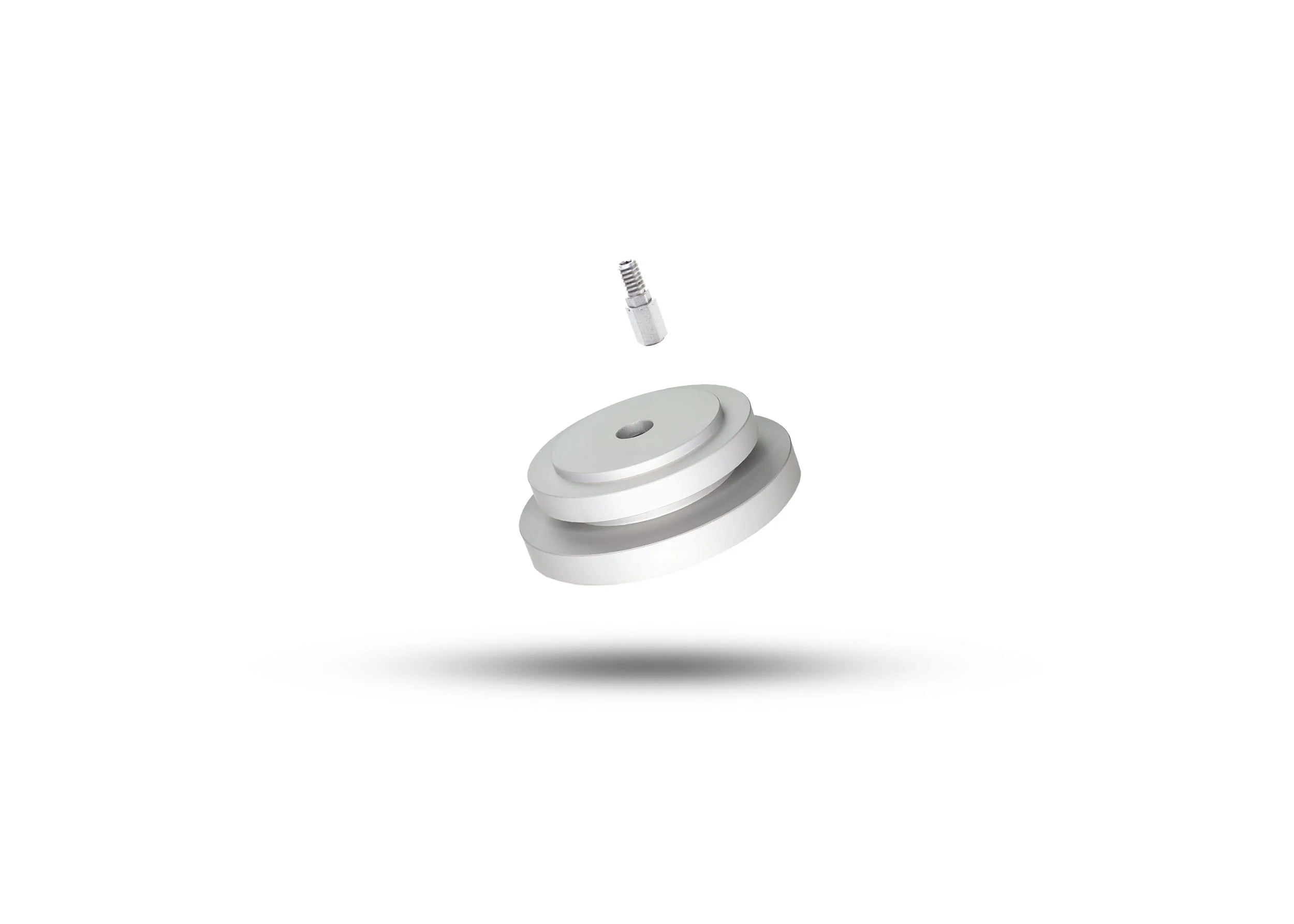
STILLPOINTS: REFINING PERFORMANCE BEYOND THE AUDIBLE
At Bricasti Design, we approach product design as a complete system, where electronic performance, mechanical stability, and long-term reliability are inseparable. Achieving the highest level of musical fidelity requires attention not only to circuit topology and power delivery, but also to the control of mechanical vibration within and around each component.
For this reason, we integrate selected Stillpoints mechanical isolation solutions across our product range, including both our electronics and our loudspeakers.
Addressing Vibration at Its Source
All audio components are affected by vibration. External energy from loudspeakers and room interactions combines with internally generated vibration caused by transformers, current flow, and mechanical resonance within the chassis or structure.
Stillpoints’ approach extends beyond conventional vibration control. Rather than focusing solely on the audible frequency band of 20 Hz to 20 kHz, their designs address micro-vibrations well above the audible range, where electrical activity and mechanical behavior continue to interact with sensitive circuits.
By reducing vibration across this broader spectrum, distortions are minimized before they can degrade signal integrity, timing accuracy, and low-level resolution.
Materials, Construction, and Long-Term Stability
Stillpoints products are manufactured exclusively with stainless steel and precision ceramic bearings. No springs, elastomers, or compliant materials are used—components that can compress, fatigue, or change characteristics over time.
This construction ensures performance that is:
Mechanically stable
Predictable and repeatable
Immune to long-term degradation
The extreme hardness of the ceramic elements prevents energy storage and delayed release, encouraging vibration dissipation rather than reflection into the component or structure. This contributes to improved intelligibility, spatial clarity, and preservation of subtle musical information.
Application in Our Electronics
Stillpoints isolation complements our work in power supply design, circuit layout, and chassis construction across our electronic components. While our enclosures are engineered for rigidity and stability, mechanical isolation provides an additional layer of control, addressing residual vibration that structural design alone cannot eliminate.
A Patented, Multi-Stage Isolation Philosophy
At the core of Stillpoints' technology is a patented, multi-tier mechanical filtering system. Instead of attempting to absorb vibration at a single interface, the system progressively reduces energy across multiple stages, lowering its impact on sensitive electronic and mechanical systems.
This design philosophy is consistent throughout the Stillpoints range and emphasizes controlling vibration at a fundamental level rather than masking its effects.
Freedom From Mechanical Influence
The resulting improvements are not tonal in nature, but instead manifest as:
Greater clarity and low-level resolution
Improved spatial coherence
Enhanced dynamic stability
A more natural sense of musical flow
Our goal is not to impose a character but to remove limitations.
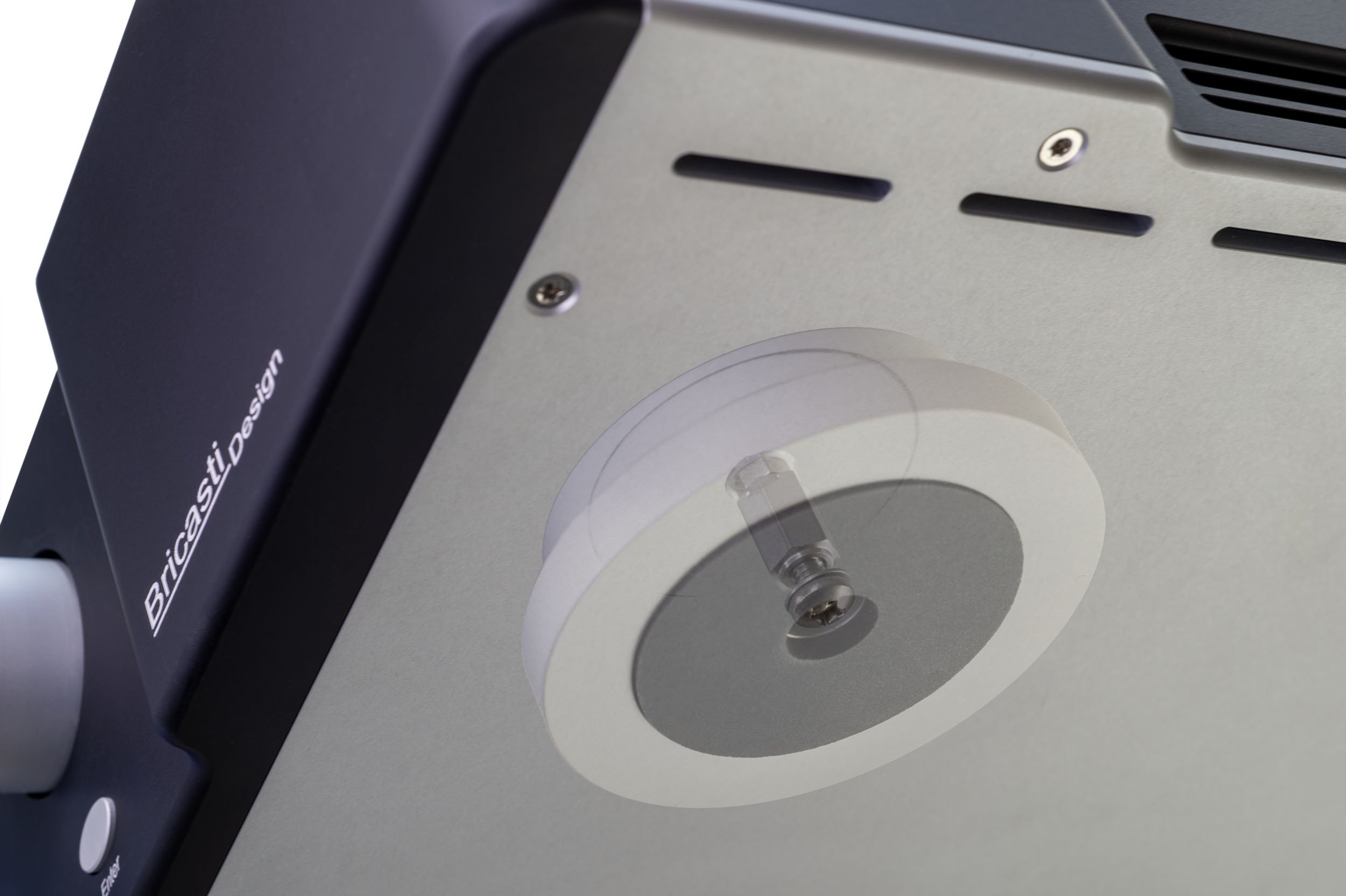
By controlling how vibrational energy exits the system, we reduce structural resonance, lower micro-smearing effects, and preserve low-level detail. The result is improved bass articulation, greater dynamic stability at higher playback levels, and enhanced spatial focus throughout the frequency range. Mechanical grounding is not treated as an accessory feature, but as an integral component of the S7’s overall performance architecture.
The S7 Integrated Mechanical Isolation
Our S7 speakers integrate Stillpoints Ultra 5 V2 isolation technology as a fundamental part of their mechanical foundation. These devices are directly coupled to our newly developed internal vibration platform, creating a unified interface between the loudspeaker structure and the floor.
This approach allows energy generated within the cabinet, particularly from the dual low-frequency drivers, to be more effectively managed and dissipated rather than reflected back into the enclosure.